Do you publish live listings?
No. Book a call with search criteria and we will talk through what you can actually close.
Grocery Store Business Broker · HedgeStone Business Advisors · Jason Taken
Last updated 2026-09-03
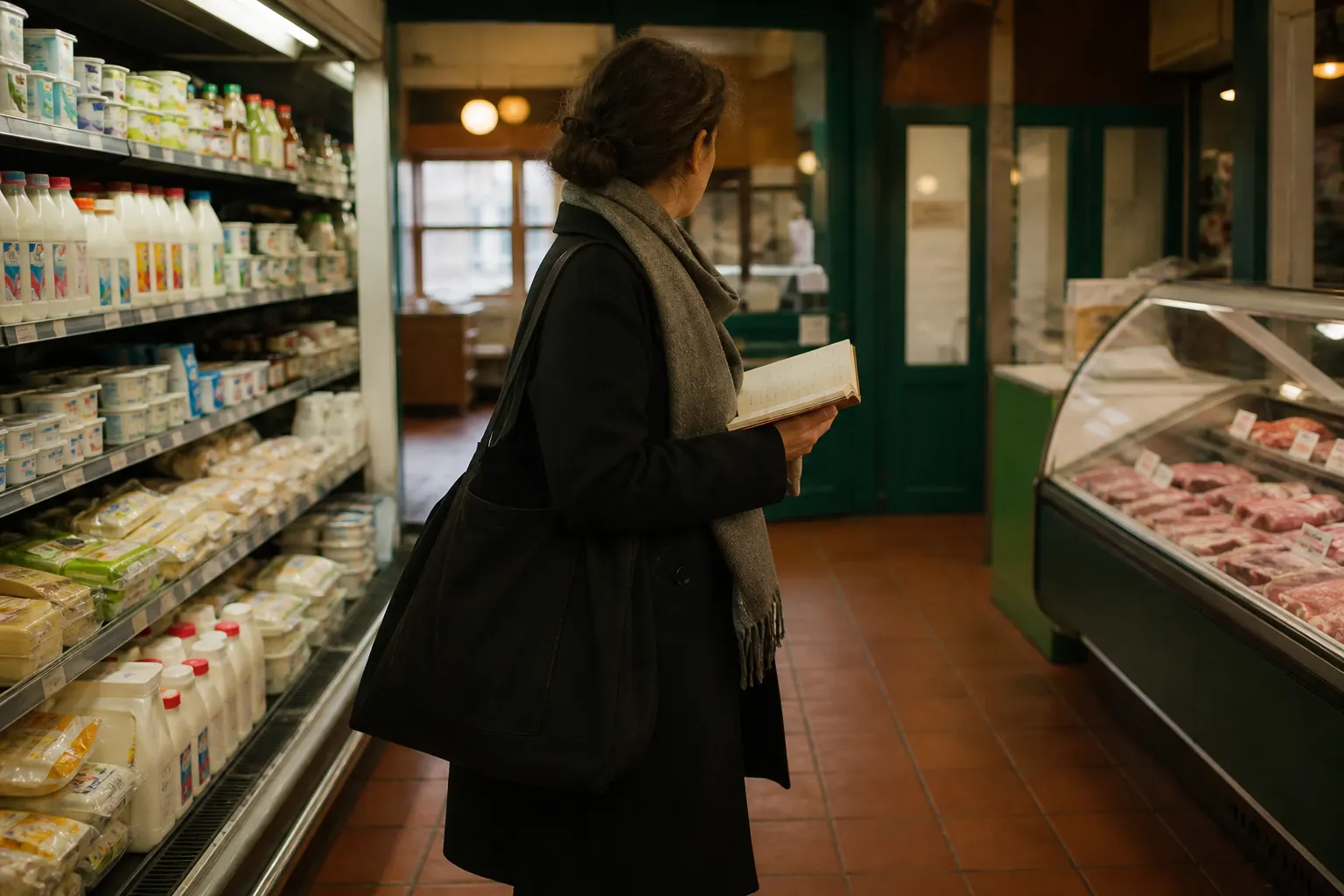
Buying a grocery store is underwriting, not sightseeing. Photos of produce do not pay the note. A financed buyer has to prove sales, recast SDE, survive shrink, live with the lease, re-apply for SNAP, and clear alcohol on that agency’s timeline. Grocery Store Business Broker — HedgeStone Business Advisors, led by Jason Taken — works that sequence with you. Jason also sees grocery files through Jaken Finance Group, which is how DSCR conversations stay honest.
This site does not publish a live listings board. You bring search criteria: format you can staff, geography you will actually move to, and capital you can document. Then you look at files. Start at how to buy a grocery store step by step and download the Buyer Underwriting Workbook before you ask for a CIM.
Sales proof. Weekly sales, sales-tax filings, scan, wholesaler statements, and EBT deposits should tell one story. A gap is mix, downtime, or fiction. FMI’s $668,377 average weekly sales per supermarket in 2025 is a channel benchmark. It is not this store. Read verifying sales with scan data.
Shrink. If shrink is “about 2 percent” with no count history, assume it is worse. Department mix hides in a storewide blend. Meat and produce can sink a “healthy” grocery margin. Turns are not one number: center store and wine do not share a clock. See shrink, margin, and turns.
Rent-to-sales. Occupancy that eats the mid-single digits of sales needs a recast or a renegotiation. A below-market related-party rent juiced the seller’s earnings and will reverse on day one. Use the rent-as-percent-of-sales checker. Read lease diligence for assignment, remaining term, exclusive use, co-tenancy, and CAM.
DSCR. Annual cash flow after an honest recast, divided by annual debt service. Hope is not a ratio. Use the SBA 7(a) payment and DSCR calculator. If the store only works with the seller in the meat case 70 hours a week, model the labor you will actually hire.
Red flags that should stop a tour: unreported cash, an oral lease, a wholesaler over-advance the buyer cannot assume, and a SNAP-heavy mix with no compliance history. See red flags that should kill a grocery deal.
Teaching example, labeled illustrative: a $1,050,000 going-concern (ex-inventory) at 15 percent equity is $157,500. Inventory at cost of $180,000 is usually cash or a short-term piece, not magic. Add $75,000 working capital — the cash to buy the next load — and $30,000 for closing plus SNAP downtime. You are a roughly $442,500 buyer, not a $157,500 buyer. Say the real number on the call. The cash-to-close estimator exists so you stop surprising yourself.
Inventory is a separate line at cost, counted at close. Retail tags are not cost. Unsellable is a fight you write rules for before 2 a.m. Read how inventory is counted and closing-day count procedures.
BizBuySell grocery sold figures — 3.38 average earnings multiple in 2025; IQR 1.60–3.15 for 2021–2025 — are a national listing-site sample. Offer inside a band you can defend after you subtract holes. Revenue multiples hide rent and labor. Use 0.43 (2025 sold-sample average) only as a cross-check, then return to SDE. The valuation hub is the method. The multiples report is the sourced sample in one place.
SBA 7(a) is SBA’s primary business-loan program. Published uses include change of ownership. Published maximum is $5 million. Eligibility bullets on the program page include a for-profit U.S. business that is small under SBA size rules, not an ineligible type, unable to obtain the desired credit on reasonable terms elsewhere, and creditworthy with a reasonable ability to repay. Inventory treatment, standby seller notes, and equity injection are deal-specific. Do not invent SOP line items from a forum. Read SBA 7(a) for grocery acquisitions.
Conventional or credit-union paper shows up when the box and the borrower are boring in a good way. See conventional and alternative financing.
Seller carry often sits on standby behind the senior loan. Read the standby, not the folklore. Buying with seller financing and how much a seller should carry are the two sides of that conversation.
Walk. A food-desert story without a lease and without sales proof is a donation. Read buying in a food desert. A pretty CIM is not a reason to buy shrink. First-time owners need grocery or restaurant hours someone will underwrite — buying as a first-time owner.
Language on the floor is not a diversity slogan. It is who can order, who can stop shrink, and who the regulars will still greet. Hispanic, Asian, Indian, halal, kosher, and Caribbean / African files fail when the buyer cannot staff the counter. Read buying an ethnic market outside your community before you tour.
An independent supermarket is a wholesaler, labor, and occupancy file. A neighborhood grocery is a lease-and-hours file. Rural can be a good living and a difficult loan. Gas-station grocery and convenience-with-grocery mix fuel or lottery with a grocery room that still has SNAP. Natural / organic and specialty live on different turns. A food co-op is governance plus P&L. Grocery with real estate is two prices — buying a store with real estate.
Banner versus independent is a consent problem: franchise or banner versus independent. Distressed boxes still have a lease and a stockroom: buying a distressed store.
USDA FNS: SNAP authorization does not transfer. Budget the application and the downtime in cash. Alcohol is a class, a quota, or a control-state product — NABCA lists 17 control states plus local-control pockets. WIC is a vendor file. Lottery is often personal. Tobacco sits with tax and health agencies. Write license outs into the LOI. Read the LOI terms that matter for buyers and EBT / SNAP diligence. Print the closing and license checklist.
State pages exist because wage, food tax, alcohol, and clearance differ. Start at buy a grocery store in California, New York, or Texas. Metro pages such as Los Angeles and Dallas–Fort Worth are trade-area teaching.
Post-close, the first 90 days are vendor trust, shrink, and not changing the mix for sport. Read the post-closing 90-day plan and transition and training periods. Attorneys and CPAs who have never closed a grocery file will rediscover SNAP in week six — bring them working with attorneys and CPAs.
Qualified is not a personality. It is proof of funds, a format you can staff, and a geography you will occupy. Grocery experience helps. Restaurant or other perishable retail can substitute if you are honest about the gap. Language on the floor is an operating requirement on ethnic files. Hours you will actually work are an operating requirement on neighborhood and rural files.
Jason Taken would rather send you to the buyer workbook than tour you through a store you cannot fund. The FAQ and buyer FAQs cover the relationship. How it works covers the sequence after you are under NDA. State wage and alcohol context — minimum wage, alcohol regime — belongs in the model before you fall in love with a corridor.
FMI’s $1 trillion in 2025 supermarket sales is why grocery is still a real industry. It is not why this particular box will cover your note. The 2.1 percent food-retailer net sample is a reminder that grocery is thin. Your recast is allowed to be better or worse. It is not allowed to be a slogan.
A CIM is a seller’s narrative. Read it as a list of claims to prove. Weekly sales without scan is a claim. “Shrink is fine” without counts is a claim. “The lease is no problem” without an abstract is a claim. How to read a CIM is the annotation method. Evaluating a store’s P&L and anatomy of a grocery P&L are the department-level read. Surviving due diligence is the calendar after the LOI.
Conversion fantasies — new banner, new mix, new hours — need a lease that allows them and a customer who will still come. Read buying and converting before you price a turnaround. Competition and trade-area math is how you stop using a ZIP-code story as diligence.
How much cash you need is a stack: equity, inventory, reserve, SNAP lag, first payroll. How much money you need is the worksheet in prose. Buyer FAQs about working with a broker is the relationship. Asset purchase agreement essentials is where the real store lives: contracts, equipment, excluded assets.
If you want a second operator in the room — a partner who has grocery hours — say that on the first call. First-time capital with no perishable skill is how lenders stall. Jason Taken would rather tell you that in week one than watch a file die in week nine.
Minimum wage, food tax, and alcohol are model inputs. Minimum wage, grocery sales tax, and alcohol regime are the three tables. They do not invent store counts. They do keep you from pricing a control-state spirits fantasy in a license-state beer file.
If you already know the format, skip to that buy page: independent supermarket, neighborhood grocery, Asian grocery, rural grocery, discount or salvage, or grocery with real estate. Those essays teach the operating questions a lender will ask after the CIM looks pretty.
Short questions live under what is a good profit margin and how much is a grocery store worth. The long method lives on valuation. Paper you can mark lives on downloads.
When the workbook is marked, schedule the buyer strategy call. Bring proof of funds, the format you can staff, and the states you will move to. That is enough to start looking at real files. Print the closing and license checklist so SNAP, alcohol, and the count have a written home before you write an LOI. The valuation calculator is a sketch, not a quote.
Use this napkin recast on Buy a grocery store when you book the call. It is labeled illustrative. BizBuySell's 2025 grocery sold-business earnings multiple averaged 3.38, with a 2021-2025 IQR of 1.60-3.15.
| Input or output | Illustrative figure |
|---|---|
| Weekly sales (illustrative) | $124,000 |
| Annual sales | $6,448,000 |
| Recast SDE | $264,368 (4.1% of sales) |
| Inventory at cost | $537,333 (~12 turns) |
| Occupancy check | $161,200 / year (2.5% of sales) |
| Low going-concern | $1,105,724 at 2.15x SDE + inventory |
| High going-concern | $1,290,782 at 2.85x SDE + inventory |
| Sketch DSCR on a note | 1.45 |
If weekly sales or shrink move 8 percent, the SDE and the note move with them. That is why Jason Taken starts with scan data and the lease, not with a neighbor's rumor multiple.
Bring proof of funds or a lender pre-screen, your format, and geography. Jason will tell you whether a store like this can clear SBA or seller-carry math.
Print these, mark them up, and bring the marked copy to the intro. They are educational. They are not a valuation letter and not a listing. All downloadable guides.
Have the file ready so the hour is a recast, not a scavenger hunt. Then pick a time.
Underwrite the deal before you fall in love with the store
Scan data, SNAP mix, rent-to-sales, and DSCR. If those four do not clear, the CIM photos do not matter.
Schedule a Buyer Strategy CallNo. Book a call with search criteria and we will talk through what you can actually close.
Sometimes, with equity and grocery experience or a partner who has it.
No. USDA FNS: SNAP authorization does not transfer; the new owner files a new application. Plan downtime in cash and in what you tell the landlord. Book a confidential intro to put FNS on the cash-to-close list.
3.38 average earnings multiple on grocery/supermarket businesses sold on BizBuySell in 2025; IQR 1.60–3.15 sold-business earnings-multiple interquartile range (2021–2025). Then subtract holes.
Source and finance a grocery acquisition
Jason Taken works buyers through qualification, SBA or seller-carry structure, and a diligence plan a lender will fund. Book the hour.
Schedule a Buyer Strategy CallThis page is educational information from Grocery Store Business Broker (HedgeStone Business Advisors). It is not legal, tax, or investment advice. Licensing, tax, and financing rules vary by state and deal. Confirm every item with counsel and your lender before you sign.
Ready when you are. Jason Taken will talk through the file.
Book a confidential intro