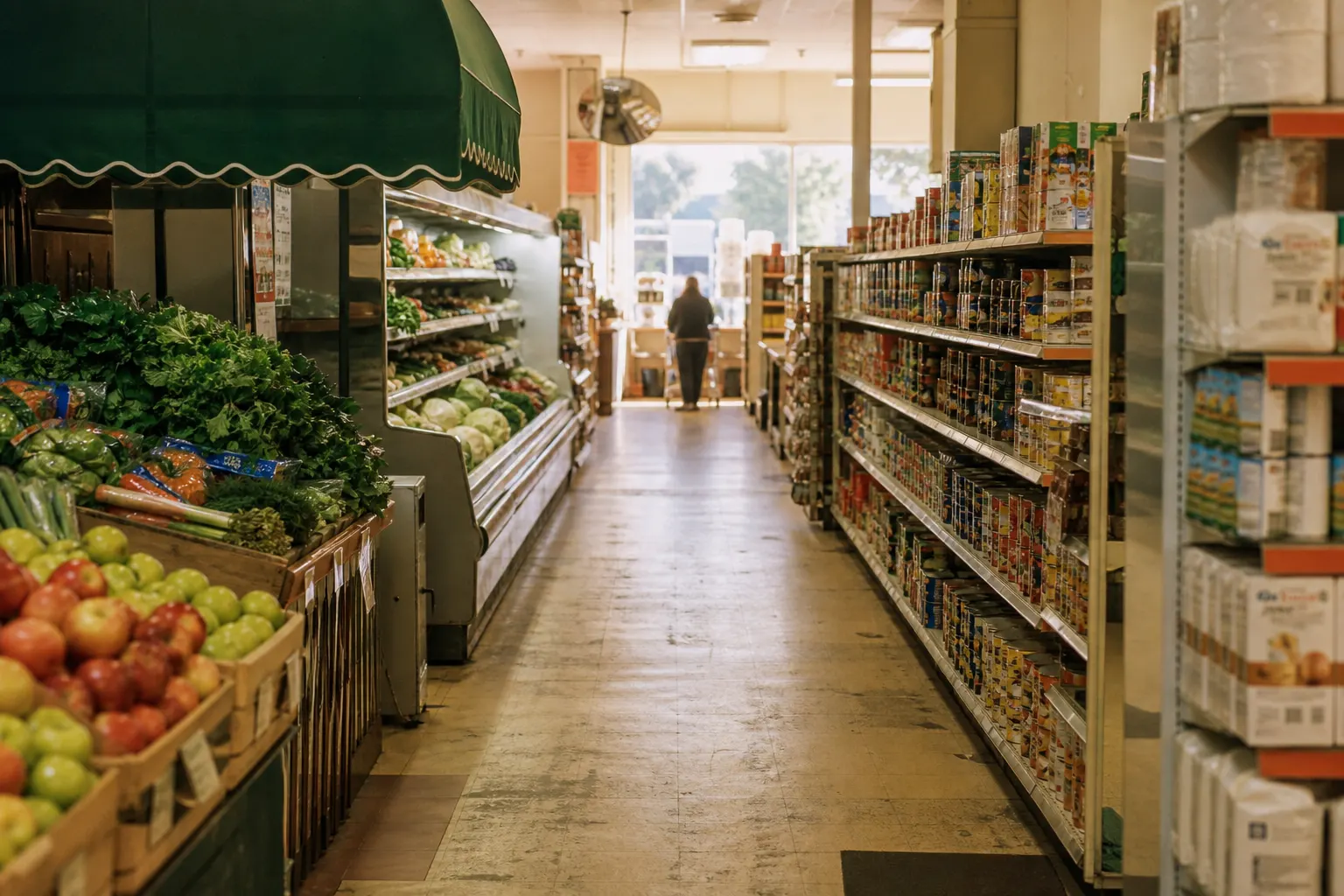
Do not invent a state retailer count. The SNAP table in this research pack carries a null retailerCount for every state and the District of Columbia. Those counts were not extracted. They stay unused on this page, on the state hubs, and in any CIM this firm will put in front of a buyer. USDA FNS partners with authorized retailers and publishes retailer materials on its own hub. This pack did not pull a state-by-state census from that hub. Book a confidential intro with the store’s own authorization and EBT settlement so the file you actually have can be underwritten.
The sourced fact that moves a grocery deal is not a ranking of states by authorized retailers. It is the ownership-change rule. USDA FNS states that SNAP retailer authorization does not transfer. A SNAP permit is valid only for the location and owners on record. If you sell the store, the new owner may not use your permit and must file a new application. That sentence is the same in Alabama and in Wyoming because FNS is a federal program. The state row exists to remind you that we did not extract a local retailer total — not to imply that the transfer rule changes at the state line.
Food retailing is still a thin-net trade. FMI’s 2025 Speaks sample reports a 2.1% average net profit for food retailers, $1 trillion in supermarket sales, $668,377 average weekly sales per supermarket, and $19.59 weekly sales per square foot of selling area. Census monthly retail trade, via FRED MRTSSM44511USN, reports $72,706 million in June 2026 sales for NAICS 44511 supermarkets and other grocery stores except convenience, not seasonally adjusted. None of those channel facts is a SNAP retailer census. A box that takes a large share of rings on EBT can lose a month of that mix while FNS processes a new file. In a 2.1% net business, that is not a footnote.
BizBuySell’s grocery and supermarket sold sample shows a 3.38 average earnings multiple in 2025, a 2.66 five-year average, a 1.60–3.15 earnings-multiple interquartile range for 2021–2025, and a 0.43 average revenue multiple in 2025. A multiple applied to earnings that assume uninterrupted EBT is a multiple applied to a hope. Recast the gap first.
County Business Patterns establishment counts were not extracted either. They stay unused. Do not substitute a rumor store count, a SNAP retailer ranking, or a “food desert” slogan for a P&L.
Why this pack does not publish state retailer counts
The honest limitation belongs in the open. Researchers and portals publish SNAP retailer totals. This site’s research pack did not extract them. The snap.json rows repeat one operational note — USDA FNS authorization does not transfer — and leave retailerCount null. Industry facts in the pack say the same thing in prose: state-by-state authorized-retailer counts were not extracted for this pack.
Inventing a number to fill the hole would violate the sourcing rule that governs every teaching page here. A rounded “about 8,000 in Texas” or a remembered FNS dashboard figure is still an invented statistic if it is not in data/. Do not ask this page to rank states. Ask it to teach the file.
If you need a public census, go to the FNS retailer hub and read what FNS publishes on the day you read it. Do not paste that number back onto this site unless it is extracted into the pack with an accessed date. Until then, the state statistic you can defend is: not extracted.
The fact that does move a grocery deal
Authorization is location-specific and owner-specific. A stock sale that changes owners still trips the rule. An asset sale that changes the entity on the door trips the rule. A family transfer that looks informal to the parties is still a new owner to FNS. Plan the application the way you plan landlord consent: on a calendar, with a person assigned, before the LOI treats “SNAP included” as a closing deliverable.
See what happens to SNAP authorization when you sell for the transfer mechanic and EBT and SNAP diligence for history, mix, and compliance letters. This guide exists so no one uses a missing census as an excuse to skip those pages — or as an excuse to fabricate a competitive set.
SBA 7(a) can finance a change of ownership up to the published $5 million maximum. The lender will ask whether the store can accept EBT after close. “The state has many SNAP retailers” is not an answer. “Here is the application date, the expected gap, and the cash to staff through it” is an answer.
How to read EBT mix without a census table
Use the store. Pull scan data or department sales. Isolate SNAP-eligible rings if the POS allows it. Tie EBT settlement deposits to weekly sales. A gap is mix, downtime, or fiction. In states that still tax groceries, SNAP purchases may be exempt at the register while cash grocery is taxed — Mississippi’s DOR materials in the sales-tax pack make that split explicit. The grocery sales-tax guide is the place for rate codes. Here, the point is that EBT is both a sales-corroboration tool and a tax-column tool, and neither job requires a state retailer total.
WIC is a vendor file, not a sticker on the door and not a SNAP permit. Tobacco licenses sit with tax and health agencies. Lottery contracts are often personal. Do not bundle those files into “the SNAP number.” See the WIC, lottery, and tobacco checklist.
Food-desert rhetoric does not replace a P&L. Buying in a food desert is a trade-area essay. It is not a license to invent how many authorized retailers sit inside a radius. If you need a competitive set, drive the trade area and count the doors you can name. That is fieldwork. It is not a SNAP statistic from this pack.
Alcohol is a separate agency. NABCA lists seventeen control states plus local-control pockets. A dark EBT terminal and a missing beer privilege in the same week is a first-month crisis. Sequence both clocks. See the alcohol-regime guide.
What to put in the CIM, the LOI, and the APA
The CIM should state that SNAP does not transfer and that the buyer will file a new FNS application. It should show EBT as a percentage of sales only when the settlement files support the percentage. It should not show a state retailer ranking. It should not imply that a high statewide count makes authorization automatic. A weekly-sales spreadsheet without department mix is a rumor; an EBT percentage without settlement files is the same rumor in a federal wrapper. If the seller cannot produce settlement, do not invent a statewide retailer count to make the mix look normal. Ask for the FNS letters and the deposit file, then recast the earnings as if the terminal could go dark on day one.
A buyer comparing two stores in different states will want a ranking. This pack will not give one. Compare the two EBT settlement files, the two FNS letter folders, and the two downtime budgets. That is the only SNAP statistic that prices a close. If one seller has no settlement and the other has twelve clean months, you already know which file is real — without a state retailer count.
The LOI should name who files, who pays the application costs, who funds inventory if the terminal is dark, and whether a slice of the price waits on authorization. Inventory is still counted at cost. SNAP-eligible product does not change the count rule. It does change how fast that product turns if customers cannot use their cards.
The APA should repeat the CIM’s honesty: authorization is not an included asset. Schedules should list the current FNS number as seller’s, not as a transferred permit. Transition hours are a close condition. The seller who knows the EBT rush and the cashier who can run the terminal is part of whether the first week survives.
Tax clearance is a different agency. Bulk-sale notices and successor sales-tax holdbacks do not file the FNS application for you. Keep bulk sales and tax clearance on its own calendar.
A rural box can be a good living and a terrible loan if the earnings assume EBT that will be dark for a month and the working-capital line cannot buy the next load. Working capital is the cash to buy the next load, not a vibe. Multi-store sales need a shared FNS calendar. One store’s authorization does not cover the second.
Employees learn from vendors and shoppers. Confidentiality is a process, not a speech. A sudden “cards not working” sign is how the neighborhood learns the store changed hands. Plan the customer message the same week you plan the application.
Compliance history is a store fact, not a state ranking
FNS correspondence belongs in the data room. Trafficking charges, disqualification periods, and warning letters travel with the location in the buyer’s underwriting even though the permit itself does not transfer. A clean application from a new owner can still be slowed by a store that FNS already knows. Ask for the letter file. Do not treat a missing census of statewide retailers as a substitute for that folder.
Staple-food and eligibility rules are federal. The buyer has to be able to operate as a grocery under FNS’s retailer standards after close. A conversion that strips meat and produce to run a convenience mix is a different authorization conversation. See buying and converting. This page will not invent how many authorized retailers already sit in that county.
The landlord needs a story that is not “cards may work.” If the lease has a use clause that assumes a full-line grocery, a dark EBT terminal is a use-clause problem as well as a sales problem. Tell the landlord the filing date, not a state statistic. The wholesaler needs a credit line that assumes a slower first month. Over-advances are debt. They are not an add-back that offsets a SNAP gap.
Earn-outs on grocery are hard because the buyer controls mix after Monday. An earn-out that assumes last year’s EBT percentage without a functioning terminal is a lawsuit dressed as a kicker. If the parties want a holdback tied to authorization, write a date and a document — the FNS approval — not a hope.
Post-close, the first ninety days are vendor trust, shrink, and not changing the mix for sport. Keep the SNAP-eligible set on the shelf while the new authorization is pending or live. A buyer who rearranges the store into a specialty mix during the gap can fail both the customer and the application.
When the settlement files are in a folder, book a confidential intro. Bring the current FNS authorization, twelve months of EBT deposits, and a draft close calendar. Grocery Store Business Broker (HedgeStone Business Advisors) will treat SNAP as a process problem: new application, downtime budget, mix that ties to the recast. We will not invent a state retailer count to decorate the teaser.
Continue on the seller hub or the buyer hub. The valuation pillar is for recast earnings plus inventory — after you have refused the missing census and written the FNS clock into the paper.
An illustrative recast on SNAP retailer statistics by state
These figures are a teaching walk-through for SNAP retailer statistics by state, not a quote and not a sold comp. Order of operations: weekly sales, recast SDE, inventory at cost, then a multiple band.
Inventory is cash at close, not a multiple. Confusing the two is how sellers over-ask and buyers under-cash the wire.
Book the intro call with your side of the table ready: seller files or buyer capital. The calendar is the only next step.
This page is educational information from Grocery Store Business Broker (HedgeStone Business Advisors). It is not legal, tax, or investment advice. Licensing, tax, and financing rules vary by state and deal. Confirm every item with counsel and your lender before you sign.