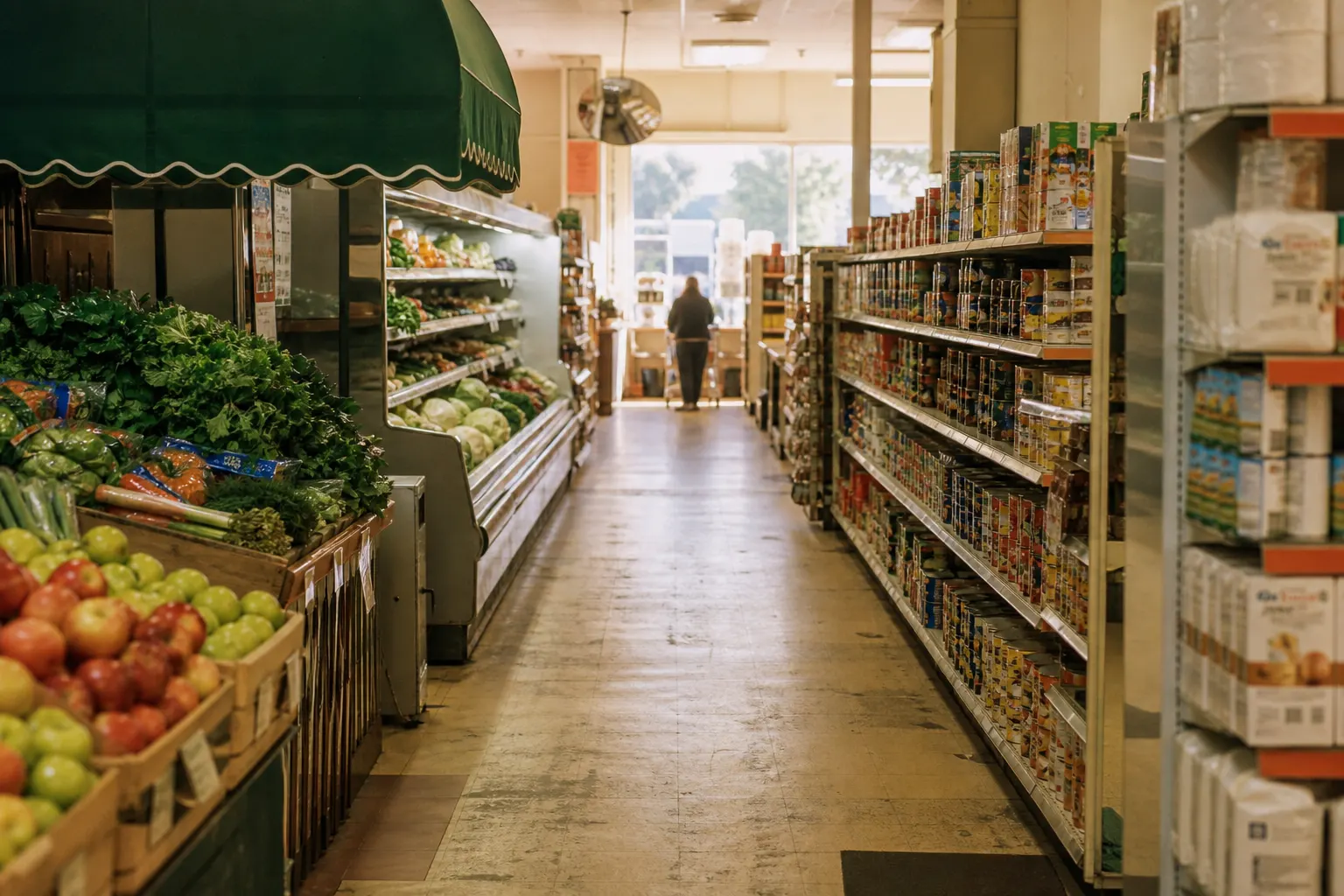
A quota license is a scarce off-premise privilege. The state or the town will issue only so many of that series. Transfers can carry a market price that has nothing to do with grocery SDE. If the LOI treats the license as “included” at book value, you have already mis-priced the store.
Grocery Store Business Broker — Jason Taken at HedgeStone Business Advisors — separates the privilege from the recast before anyone quotes a multiple. Book a confidential intro when you want that split on your file. Bring the license class, the issuing agency, and an honest aisle mix.
FMI’s 2.1 percent average net profit for food retailers in 2025 is a food-retailer sample. A quota package privilege can be worth more than a year of that net. Treat it as a second asset.
Quota is a scarce privilege, not a sticker
Not every alcohol paper is a quota. Plenty of grocery beer-and-wine licenses are issued as of right, subject to zoning and a local board. Quota language belongs to limited series: Florida’s quota liquor licenses, Massachusetts Section 15 package-store licenses under municipal population formulas, New Jersey plenary retail distribution licenses, Wisconsin municipal Class “A” liquor licenses, Kentucky package quotas in wet counties, California off-sale general licenses limited by census-tract formulas in many areas.
Confirm the series on the certificate, then confirm the agency’s current list. Florida ABT, Massachusetts ABCC plus the local board, New Jersey ABC plus the municipal board, Wisconsin DOR plus the clerk — the desks differ. This page will not invent a statewide “quota price.” Markets move. Hearings fail. Dry towns stay dry.
A quota can sit on the grocery or sit next to it. Some independents own the scarce series and hang it on the supermarket. Some lease the privilege from a third party. Some have beer and wine only and a package store across the parking lot. Ask which of those you are buying. The CIM photo of a spirits aisle is not an answer.
Wet, dry, and moist maps can zero a quota that looks valuable on a statewide blog. Arkansas county option, Kentucky local option, Texas wet/dry elections, and Mississippi dry counties are deal-killing facts. Confirm the county before you add a license line to the teaser.
Price the license apart from grocery SDE
Recast the store as a grocery. Normalize owner pay, related-party rent, and one-time items into SDE. Count sellable inventory at cost, including alcohol that the incoming licensee will actually be allowed to sell. Then ask what the scarce privilege would fetch if it were sold without the store — or what it would cost to replace if the agency said no.
BizBuySell’s grocery and supermarket sold sample printed a 3.38 average earnings multiple in 2025, a 2.66 five-year average, and a 1.60–3.15 IQR for 2021–2025. That sample prices grocery businesses on a listing site. It is not a print of Florida quota trades or Massachusetts package-license transfers. Do not bury a scarce series inside a 2.5× grocery story.
SBA 7(a) change-of-ownership loans go to a published $5 million maximum. Lenders still have to understand what they are securing. A quota that can be stripped and sold is a different collateral story than a beer-and-wine permit that dies if the grocery dies. Put that in the structure conversation early.
Sellers who own a valuable series should say so in the blind teaser at a grain that does not name the corner. Buyers who need spirits to make the DSCR work should treat agency approval as a walking condition. Compare offers on cash at close, note terms, inventory treatment, and whether the privilege actually conveys. Read comparing offers.
If you own the building, still recast the store on market rent and cap the dirt as a second asset. The quota is a third. Three assets. Three conversations. See selling with the building.
Wet, dry, and municipal caps
Population formulas and municipal boards are how quotas stay scarce. Massachusetts towns issue package licenses against a statutory count. Wisconsin villages run Class “A” quotas. New Jersey municipalities sit on plenary retail distribution licenses that trade because new ones are hard to get. Florida counties have quota liquor counts that are a known asset class.
A full quota means a new issue may be impossible. The only path is a transfer from a current holder — sometimes the grocery you are buying, sometimes a third-party seller. A transfer still needs agency and local approval. It is not a bill of sale you notarize in the back room.
Local hearings add politics. Neighbors, churches, and competing package stores show up. This page will not invent a hearing calendar. Counsel and the local board own the clock. Budget time. Do not promise a lender a spirits aisle on a date you cannot control.
Control states are a different scarcity. NABCA lists seventeen control states, plus local control in Alaska, Maryland, Minnesota, and South Dakota. Pennsylvania restaurant and distributor licenses can be quota-limited even while spirits stay in Fine Wine & Good Spirits. Maine agency-store appointments and Oregon liquor-store contracts are limited. Do not call those “quotas” as if they were a Florida series. They are appointments. Read control state.
What the LOI should say about the privilege
Name the class and the issuing agency. Say whether the privilege conveys with the grocery assets, sells on a separate bill, or stays with the seller. Say who pays transfer fees and who runs the application. Say what happens to spirits inventory if the agency refuses the incoming licensee. Say whether close walks without approval.
Those sentences belong in the APA schedules next to excluded assets. A seller who wants to keep a quota and sell a beer-and-wine grocery is running a different deal than a seller who is conveying the series. A buyer who assumes “liquor is included” will rediscover the lease of the license in week four.
Do not invent a dollar. Get a current read from people who actually transfer that series in that county — counsel, the agency list, and recent public transfers if they exist. Then decide whether the grocery is the business or the license is the business. FMI counted 45,575 U.S. supermarkets in 2024. Most of them are not a quota-package trade.
Book a confidential intro when you want Jason Taken to split the privilege from the recast. Bring the certificate, the agency’s quota list if you have it, and the aisle mix. The parent guide is liquor-license diligence. Transferring your liquor license is the process page. The valuation hub is where the grocery multiple lives — without the license fantasy folded in.
How a buyer would price What if the liquor license is quota?
Price language for What if the liquor license is quota? is (recast SDE x a defendable multiple) + inventory at cost, plus or minus lease and license risk. The table is one consistent example for this URL.
Rent at 3.6% of sales is the occupancy check. If the real lease is higher, the SDE in this table is too generous until you recast to market rent.
Book the intro call with your side of the table ready: seller files or buyer capital. The calendar is the only next step.
This page is educational information from Grocery Store Business Broker (HedgeStone Business Advisors). It is not legal, tax, or investment advice. Licensing, tax, and financing rules vary by state and deal. Confirm every item with counsel and your lender before you sign.