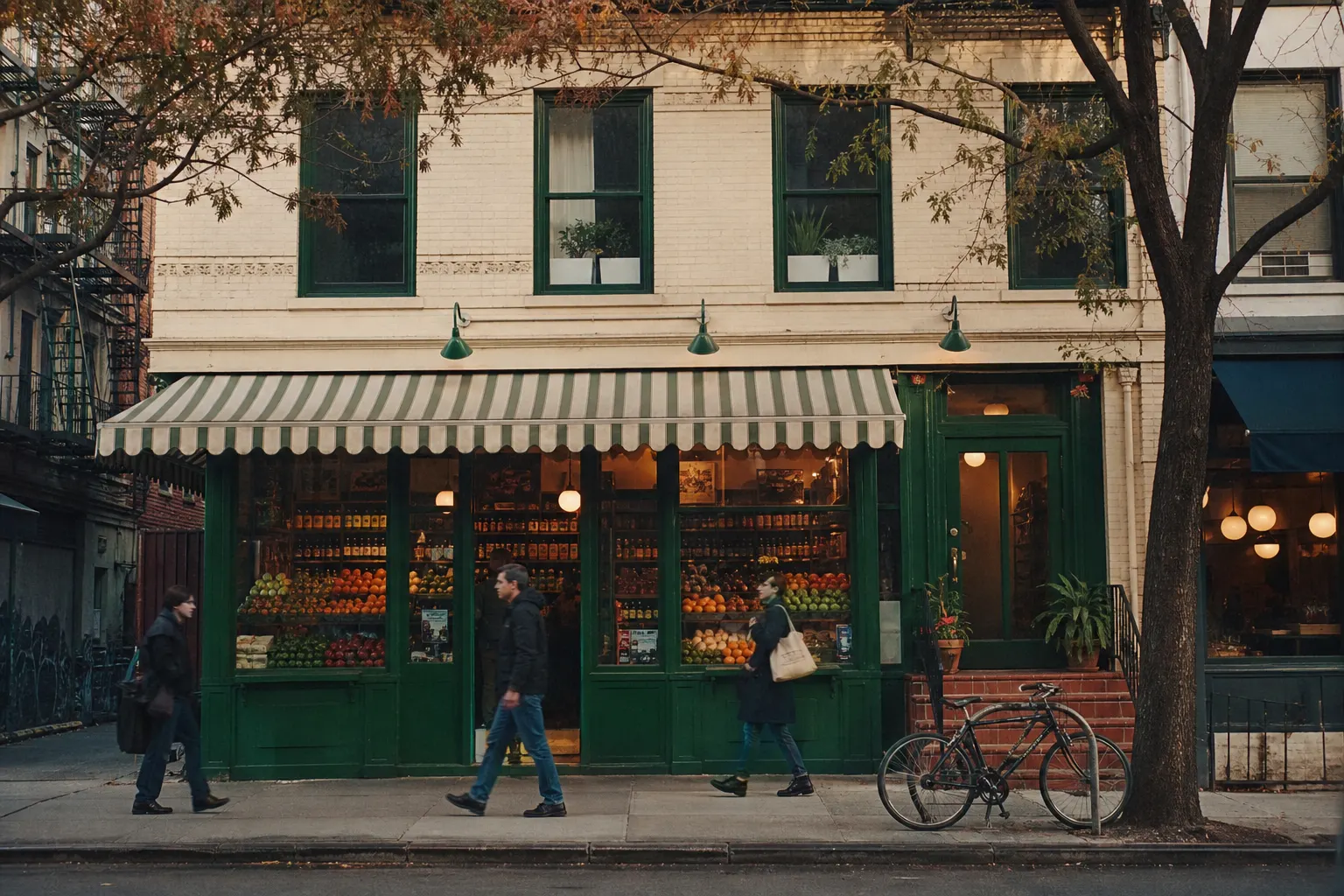
Recast the Salt Lake City file before you argue a multiple, then book a confidential intro with the lease, the DABS beer privilege, and three years of tax returns. Grocery Store Business Broker — HedgeStone Business Advisors, led by Jason Taken — treats a Wasatch independent as a Utah license-and-occupancy problem, not as a rumor about weekly sales. Statewide tax, alcohol, and labor live on the Utah seller and buyer pages. This essay is the Salt Lake City map: what the aisle actually sells, who you compete with, and which clocks move the close.
A Salt Lake City grocery is usually a leasehold. Some older neighborhood boxes and inner-ring suburbs own the dirt; confirm the file instead of assuming a split. Occupancy is a ratio of rent and CAM to sales. This research pack does not publish a metro rent-per-foot table, a Census population figure, or a grocery-density count for Salt Lake City. Those fields are null. Underwrite the actual lease and the actual P&L.
Beer stays in grocery; wine and spirits stay at DABS
Utah is a NABCA control state. The Utah Department of Alcoholic Beverage Services runs wine and spirits through state stores. Grocery beer is the privilege that can travel with an independent, and even that privilege transfers only with DABS and local approval — not with a handshake in the vestibule. Confirm current beer-alcohol-content rules with DABS for the address. Do not write wine or spirits into a Salt Lake City CIM as if they were California off-sale general.
That control-state split changes the recast. A buyer who priced a Texas package-store grocery will overstate Salt Lake City contribution from alcohol. Beer still matters: it is a high-velocity SKU, a labor and ID-check risk, and a DABS calendar item. Wine and spirits trips leave the store. An independent that built a reputation on imported beer, Pacific Islander staples, and a produce table that Smith’s does not copy can still be a real going concern. It is not a liquor store with a grocery aisle glued on.
Read alcohol rules by state and liquor-license transfer before you promise a close date. State-store siting is a DABS decision. Grocery beer is the transferable grocery alcohol story in this metro. Price it as a privilege with a clock, not as a second multiple stacked on SDE.
Recasting a Salt Lake Independent
Two Salt Lake City stores at the same weekly sales can be hundreds of thousands of SDE apart. One has documented shrink, a meat manager who stays, and a lease with options. The other has a 70-hour owner, cash that will not survive a tax return, and nine months left on the term. Sales start the conversation. They are not the value.
Going-concern value is recast SDE or EBITDA times a negotiated multiple, plus inventory counted at cost. The only sourced grocery sold sample on this site is BizBuySell’s grocery and supermarket set: a 3.38 average earnings multiple in 2025, a 2.66 five-year average for 2021–2025, an IQR of 1.60–3.15, and a 0.43 average revenue multiple on the 2025 sold sample. Those are national listing-site figures, not a Salt Lake City comp set and not a chain M&A print. Start inside the IQR. Trophy 3.38 talk belongs to a clean lease, a clean privilege, and a recast a lender will believe. Most independents live lower in the band. Walk the method on grocery store valuation and the multiples report.
FMI’s 2025 food-retailer net profit of 2.1 percent is a channel sample, not your store’s multiple. FMI’s $668,377 average weekly supermarket sales and $19.59 weekly sales per square foot of selling area are channel benchmarks. Do not paste them onto a West Valley independent as if they were the CIM. Scan data, EBT settlements, and the tax return are the sales story. Recasting a grocery P&L is the earnings story.
If the seller owns the box, recast the store on market rent first and price real estate as a second asset. Selling with a lease versus real estate is the split. Lease assignment and remaining term with options move the check more than a half-turn of multiple. Read lease due diligence before you tour.
West Valley, Glendale, and the west-side aisle
West Valley, Glendale, and the west side are the qualitative Latino and Pacific Islander independent corridors in this research pack. That is a language, produce-house, and SKU note, not a Census percentage. Do not invent a share of population. Do not price a west-side independent as if it were a suburban Smith’s box with a Spanish circular taped in the window.
A Hispanic and Latino grocery file lives on the produce table, the meat case, the imported dry grocery, and the hours the owner actually works. Pacific Islander independents in the same west-side geography add another SKU and wholesaler story. Associated Food Stores and UNFI show up in Utah independent supply. Read drop minimums, over-advances, and whether the banner or the co-op relationship survives a change of ownership. Wholesaler and banner agreements belong in diligence, not in a footnote after close.
Drive the true corridor. A buyer who only knows downtown Salt Lake City or a Utah County suburban conventional will mis-read a west-side independent. Parent-state notes on Ogden / Davis and Utah County / Provo–Orem describe other Utah geographies. Do not import those streets into a Salt Lake City CIM. If the store is in those counties, underwrite that address — do not blend it with West Valley because the metro name is convenient.
Smith’s, Harmons, Macey’s, and WinCo as the competitive set
Smith’s (Kroger), Harmons, Macey’s and other Associated Food Stores banners, and WinCo are the competitive set recorded for Salt Lake City. They are not sold listings on this page. An independent still has to explain the trips those banners do not take: the SKU a west-side shopper will not find at WinCo, the service meat Harmons will not staff at 8 p.m., the credit account a contractor runs at a neighborhood box.
Buyers who only know Smith’s will mis-read a Salt Lake City independent. Harmons is a regional conventional with a different labor and perishable standard. WinCo is a high-volume, low-price suburban pressure, not a template for a 12,000-square-foot west-side store. Macey’s and sister Associated Food Stores retailers share a wholesaler world many independents already live in. Name the competitor that actually sits on the shopper’s trip, then show department margins that survive that trip.
Do not invent a Salt Lake City store count to make the competitive set feel denser. Census CBP NAICS 445110 establishment counts are null in this pack. FMI’s 45,575 U.S. supermarket count for 2024 is a national channel figure. It is not a Wasatch inventory.
SNAP, WIC, and a Utah close calendar
USDA FNS: SNAP authorization does not transfer. The permit is valid only for the location and owners on record. After ownership changes, the buyer may not accept EBT on the seller’s permit. File a new retailer application and budget a dark stretch on food stamps in cash and in the story you tell the landlord. What happens to SNAP when you sell and EBT diligence are the federal clocks. This pack does not publish a SNAP-retailer headcount for Salt Lake City or for Utah. The sourced fact is the non-transfer rule.
WIC sits with Utah Department of Health and Human Services. A new vendor file is not a sticker swap. Utah DHHS and local health departments own the retail food permit. The incoming operator is a new file, not a name change on the wall.
Utah does not operate a traditional state lottery. Do not list lottery as a transfer item. Tobacco sits with the Utah State Tax Commission. Confirm successor liability and tax clearance with the Commission on the asset sale. UCC Article 6 bulk-transfer statutes have been repealed in most states; Utah may still impose sales-tax successor liability or a clearance practice. Confirm current notice and any escrow holdback with counsel. Bulk sales and tax clearance is the statewide teaching.
SBA 7(a) can finance a change of ownership. The published maximum is $5 million. That is a ceiling, not a quote. A fundable grocery file still needs recast SDE, hours a lender will believe, inventory at cost, and a SNAP plan that is a calendar.
Food tax, payroll, and successor liability
Utah taxes food at a reduced combined state and local food rate, commonly summarized near 3 percent. Confirm the Utah Tax Commission combined food rate table for the exact store address rather than hard-coding a single statewide number. Prepared food is taxed at the full rate. A CIM that skips that nuance will mis-state register mix and, with it, the recast. Statewide grocery-tax teaching lives on the Utah seller page.
DOL’s July 1, 2026 consolidated table lists Utah at the federal minimum of $7.25. Confirm Utah Labor Commission posters. Grocery payroll in Salt Lake City often sits above that floor because the work is nights, weekends, and perishable skill. Recast on market wages for the hours you will actually staff. Do not treat $7.25 as the labor story if the seller’s family was working unpaid.
Quiet process means DABS, the health file, and FNS stay off the sales floor while Smith’s is still in motion. Employees and shoppers talk. Start with a blind teaser and an NDA, then a qualified list. How to sell a grocery store confidentially is the seller sequence.
Associated Food Stores is the Utah independent wholesaler that shows up next to UNFI in the state research pack. A Macey’s or Dan’s banner and a west-side unaffiliated independent can share a warehouse world and still have different drop minimums, over-advances, and personal guarantees. Read whether the incoming owner can keep the account, whether the seller’s rebate accrues through close, and whether a change-of-control clause lets the co-op reset terms. A CIM that names Smith’s as the competitor but hides the Associated Food Stores contract is not a Salt Lake City CIM. Wholesaler and cooperative directory is the map; the store’s vendor file is the proof.
Inventory is counted at cost, not at retail, and not at a number the seller remembers from last Easter. Hold back unsellable, out-of-date, and owner-use product. Pacific Islander and Latino dry grocery can have long-tail SKUs that do not turn; they still have to be on the count or explicitly excluded. How inventory is counted at closing and inventory at cost belong in the LOI, not as a handshake in the freezer. A going-concern band is recast SDE times a negotiated multiple inside the BizBuySell IQR, plus that count. Do not illustrate a homemade Salt Lake City SDE dollar figure on this page. Recast the store in front of you.
Sellers should put three years of tax returns, the lease with options, the DABS beer privilege, EBT settlements, and the last physical inventory in a packet before the first qualified call. Buyers should ask for scan that ties to the return, a rent roll or lease abstract, and a written plan for FNS downtime. Preparing three years of financials and verifying sales with scan data are the diligence sequence. Asset sale versus stock sale is the structure conversation with counsel — this page is not legal advice.
Book the intro with the lease and the recast
If you own the Salt Lake City box, mark the DABS beer line, the FNS line, and the lease remaining term on a worksheet, then book a confidential intro. Bring scan, EBT deposits, and the last inventory at cost. If you want the keys, underwrite occupancy as a share of sales, confirm wet beer is the alcohol story, and plan FNS downtime before you tour. Grocery Store Business Broker will not invent a Salt Lake City asking-price average or a homemade metro multiple. The national bands are the rails. The file places the pin.
How a buyer would price Grocery stores for sale in Salt Lake City
These figures are a teaching walk-through for Grocery stores for sale in Salt Lake City, not a quote and not a sold comp. Order of operations: weekly sales, recast SDE, inventory at cost, then a multiple band. Metro pages talk corridors and operators. They do not invent asking rents or establishment counts.
If weekly sales or shrink move 8 percent, the SDE and the note move with them. That is why Jason Taken starts with scan data and the lease, not with a neighbor's rumor multiple.
Book the intro call with your side of the table ready: seller files or buyer capital. The calendar is the only next step.
This page is educational information from Grocery Store Business Broker (HedgeStone Business Advisors). It is not legal, tax, or investment advice. Licensing, tax, and financing rules vary by state and deal. Confirm every item with counsel and your lender before you sign.