Is a tax return enough to prove weekly sales?
It is one tape. You still need item-level scan or a wholesaler book, tender mix, and deposits that reconcile. A return without a week is an annual rumor.
Grocery Store Business Broker · HedgeStone Business Advisors · Jason Taken
Last updated 2026-09-04
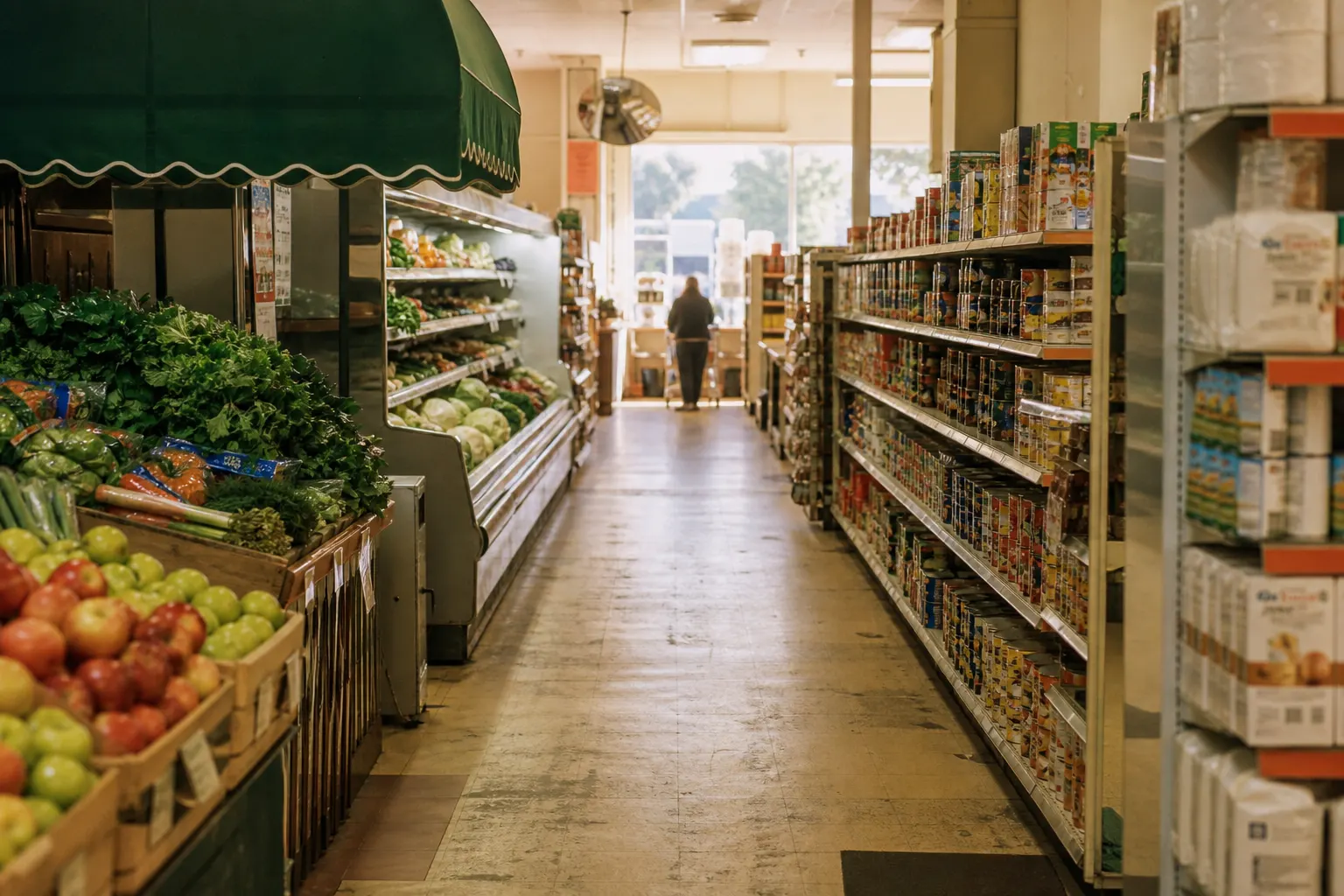
Make four tapes agree. Item-level scan data, tender mix, EBT settlements, and bank deposits should describe the same week. Where food is taxed or partially taxed, sales-tax filings are a fifth tape. Grocery Store Business Broker — HedgeStone Business Advisors, led by Jason Taken — will not recast SDE off a spreadsheet a seller typed on Sunday. Book a confidential intro with a POS export and last week’s settlement if you want those tapes lined up on your file.
FMI published $1 trillion in 2025 supermarket sales and counted 45,575 U.S. supermarkets in 2024. Census NAICS 44511 supermarket and other grocery (except convenience) sales were $72,706 million in June 2026 (not seasonally adjusted, FRED MRTSSM44511USN). Those figures describe the channel. They are not this store’s week. The longer method is verifying sales with scan data. The buyer hub is the underwriting door.
Start with a year of weekly sales by department, not a storewide total. Then tie each week to: POS item movement and voids; tender mix (cash, credit, EBT, WIC, other); processor or EBT settlement deposits; and bank deposits. A week that only exists on a PDF the owner printed is a rumor. A week that exists in scan, settlement, and the bank is a week you can underwrite.
Evaluating a store’s P&L still matters. Annual returns are the tax tape. They do not replace the week. A return that is $200,000 above the scan year needs a sentence. A return that is $200,000 below the scan year needs a different sentence. Either way, you do not average them and hope.
FMI’s $668,377 average weekly sales per supermarket in 2025 and $19.59 weekly sales per selling square foot are Speaks-channel figures. Do not paste them onto an 8,000-square-foot independent and call the file “light” or “heavy.” Compare this store to its own scan, its own labor, and its own occupancy.
Scan data is point-of-sale item history: mix, voids, discounts, and department dollars. A seller who will not export a year is asking you to underwrite a story. Ask for the raw export, not a dashboard screenshot. Look at voids and no-sales. Look at department mix. Meat and produce can sink a “healthy” storewide margin. Center store can look fine while the perimeter is a hobby.
Wholesaler statements corroborate center-store movement. They do not see most DSD or a produce truck that never hit the warehouse book. Use them as a second tape, not as a substitute for POS unless the store truly has no scanner and you are buying that risk on purpose.
BizBuySell’s 3.38 average earnings multiple on grocery and supermarket businesses sold in 2025 is an earnings sample. A 0.43 average revenue multiple on that 2025 sold sample is a sanity check. Neither figure proves a week. Recast after the tapes agree. Revenue multiples hide rent and labor. Return to SDE.
Tender mix tells you how the week gets paid. Cash-heavy files need a deposit story. Card-heavy files should match processor statements. EBT deposits should reconcile to the SNAP story the seller is telling. A gap is mix, downtime, or fiction. USDA FNS: SNAP authorization does not transfer; the new owner files a new application. You are verifying the seller’s history, not inheriting the permit. Read EBT / SNAP diligence.
WIC is a vendor file, not a sticker on the door. Lottery commission is often a personal contract. Money services can swell a “sales” number that is not grocery. Park those lines. Do not let them juice a weekly that you will then multiply.
Unreported cash does not survive SBA. It also does not survive a serious conventional buyer. SBA 7(a) can finance a change of ownership; the published maximum is $5 million. Eligibility still requires a creditworthy file with a reasonable ability to repay. A drawer that never hit the bank is not that file. Read selling a store with unreported cash if that is the story you are being told, then decide whether you are still in the room.
Grocery sales tax is not one national number. Qualifying food for home consumption may be exempt, taxed at a reduced state rate, or taxed like general merchandise, and the deli almost always sits on a different line. State-by-state grocery sales tax is the map. Where food is taxed or partially taxed, filings can corroborate taxable rings. Where food is exempt, they corroborate only the taxable mix — hot food, candy, soda, non-foods — not the grocery week.
Do not invent a rate. Confirm the rate in force on the store’s address and the closing date. Alabama’s food rate, for example, has been stepping under Act 2025-305; local taxes can continue. Alaska has no state sales tax and local taxes may still apply. Use the state page, then the department of revenue notice, then the filing.
Tax clearance still belongs in escrow language. A matching sales-tax tape does not clear a lien. See bulk-sales and tax clearance.
A lender will not treat a neighbor’s rumor multiple as proof. They will not treat “the Hispanics pay cash” as a department. They will not treat a food-desert speech as a P&L. They will treat three years of returns, a year of scan, settlements, and a recast that leaves recurring shrink in the earnings. Add-backs that repeat every year are the business. Stop calling them one-time. Recasting a grocery P&L is the earnings page.
DSCR is annual cash flow over annual debt service. If the week you can prove will not cover the payment, the file is a living, not a loan. A rural box can be both. Say which one you are buying.
Jason Taken and HedgeStone are not licensed business brokers in every state. Check the rule that applies to your deal. Buying the building always requires a real-estate licensee in that state.
Print the buyer underwriting workbook and mark the sales-verification lines. Book a confidential intro when you have a POS export, or when the seller has refused one and you want that hole priced. Bring the week you can prove. Leave the hallway number at home.
Price language for How do I verify grocery store sales? is (recast SDE x a defendable multiple) + inventory at cost, plus or minus lease and license risk. The table is one consistent example for this URL.
| Input or output | Illustrative figure |
|---|---|
| Weekly sales (illustrative) | $78,000 |
| Annual sales | $4,056,000 |
| Recast SDE | $210,912 (5.2% of sales) |
| Inventory at cost | $253,500 (~16 turns) |
| Occupancy check | $89,232 / year (2.2% of sales) |
| Low going-concern | $706,961 at 2.15x SDE + inventory |
| High going-concern | $854,599 at 2.85x SDE + inventory |
| Sketch DSCR on a note | 1.42 |
Inventory is cash at close, not a multiple. Confusing the two is how sellers over-ask and buyers under-cash the wire.
Bring proof of funds or a lender pre-screen, your format, and geography. Jason will tell you whether a store like this can clear SBA or seller-carry math.
Print these, mark them up, and bring the marked copy to the intro. They are educational. They are not a valuation letter and not a listing. All downloadable guides.
Have the file ready so the hour is a recast, not a scavenger hunt. Then pick a time.
Underwrite the deal before you fall in love with the store
Scan data, SNAP mix, rent-to-sales, and DSCR. If those four do not clear, the CIM photos do not matter.
Schedule a Buyer Strategy CallIt is one tape. You still need item-level scan or a wholesaler book, tender mix, and deposits that reconcile. A return without a week is an annual rumor.
Treat that as a diligence hole. Ask for POS exports, wholesaler statements, and EBT settlement. A seller who will not show the week is asking you to underwrite a story.
Park them off grocery sales unless the APA says they travel. Lottery contracts are often personal. Commission is not the same as a grocery ring.
As a corroboration, yes. As a substitute for scan, only if the store truly has no POS and the book still ties to deposits. Holes and DSD will still hide.
There is no sourced walk-away percent in this pack. A gap you cannot explain as mix, downtime, or a known outage is fiction until proven otherwise.
Source and finance a grocery acquisition
Jason Taken works buyers through qualification, SBA or seller-carry structure, and a diligence plan a lender will fund. Book the hour.
Schedule a Buyer Strategy CallThis page is educational information from Grocery Store Business Broker (HedgeStone Business Advisors). It is not legal, tax, or investment advice. Licensing, tax, and financing rules vary by state and deal. Confirm every item with counsel and your lender before you sign.
Ready when you are. Jason Taken will talk through the file.
Book a confidential intro