Can I value the store from weekly sales alone?
No. A sales story hides rent and labor. Use 0.43 only as a cross-check, then return to recast SDE times a negotiated multiple plus inventory at cost.
Grocery Store Business Broker · HedgeStone Business Advisors · Jason Taken
Last updated 2026-09-04
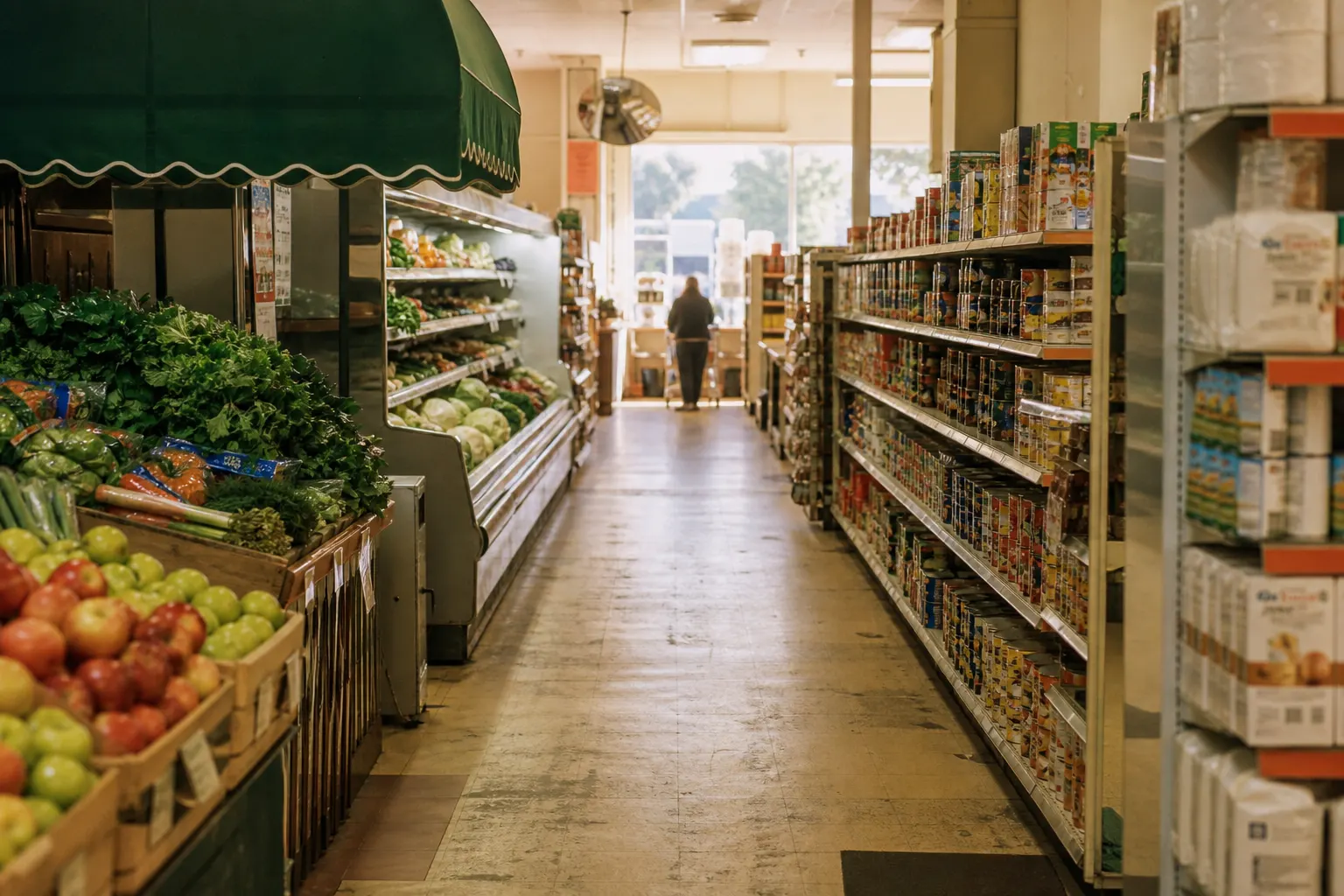
Mark the SDE worksheet, then open the valuation calculator. A grocery store is worth recast SDE times a negotiated earnings multiple, plus inventory at cost as its own line. That is the citeable answer. There is no national dollar quote that replaces your recast. Book a confidential intro with the P&L, the weekly scan, and the lease abstract when you want a band on this file.
Grocery Store Business Broker — HedgeStone Business Advisors, led by Jason Taken — prices grocery that way on the valuation hub. How to value a grocery store is the method. This page is the arithmetic.
First recast. What SDE is and how to recast a grocery P&L are the work. Owner pay, personal autos, and true one-time legal can move SDE. Recurring shrink cannot. A sales-only story is a rumor. FMI’s $668,377 average weekly sales per supermarket in 2025 describes the Speaks supermarket channel. FMI’s $1 trillion in 2025 supermarket sales and 45,575 U.S. supermarkets in 2024 describe the same channel. Your independent week is not that sample. Do not quote channel weekly as a value.
Then apply a multiple you can source. BizBuySell grocery and supermarket businesses sold in 2025 printed a 3.38 average earnings multiple. The five-year average is 2.66. The interquartile range for 2021–2025 is 1.60–3.15. What multiple grocery stores sell for and the multiples report are the sample. Offer inside a band you can defend after you subtract holes. This pack does not invent a specialty-only or rural-only multiple.
Then add the room. Inventory at cost is counted at close. Retail tags are not cost. Unsellable rules belong in the LOI before 2 a.m. How inventory is counted at closing is the night. How much inventory is at close is the payment question. Do not bury the stockroom inside SDE.
A 0.43 average revenue multiple on the 2025 sold sample is a cross-check. Revenue multiples hide rent and labor. If the sales-based story and the SDE-based story disagree, believe the recast. FMI’s 2.1 percent average net profit for food retailers in 2025 is a reminder that grocery is thin. Thin net is why worth lives on SDE, not on a “times sales” slogan.
A short lease without options is a price cut. Related-party rent that reverses is a price cut. A wholesaler book you cannot assume is a price cut. Soft add-backs that die in diligence cut SDE before they cut the multiple. Lease diligence and red flags are the hole list.
USDA FNS: SNAP authorization does not transfer. The new owner files a new application. If EBT is a real aisle, downtime is cash the buyer must fund and a reason the file will not sit at the top of the IQR. EBT / SNAP diligence belongs in the worth conversation as a clock, not as a FAQ about SNAP.
Alcohol is a class, a quota, or a control-state product. NABCA lists 17 control states plus local-control pockets. A privilege that will not move is a hole. State-by-state alcohol regime is the map. Do not price “the liquor license” as one magical asset.
SBA 7(a) can finance a change of ownership up to the published $5 million maximum. Worth still has to clear DSCR on the recast. A pretty multiple on soft earnings is a loan that will not close. What DSCR is is the coverage test.
If the real estate is in the deal, recast the store on market rent, then price the building as a second asset. Do not apply 3.38 to a blended “store-plus-land” pile. Should I sell with the building and buying a store with real estate are the two sides. A sale-leaseback is a different structure, not a higher grocery multiple.
Equipment is maintenance, not a photo that raises SDE. A walk-in that is dying is deferred capex a buyer will subtract. Asset sale versus stock sale is how most independents close — you are buying the going concern, the equipment, and the room, not the seller’s SNAP permit.
Comparing offers means cash at close, note terms, inventory treatment, and license risk — not the headline. A higher price with a soft note and a messy room can be a worse check than a lower price with inventory rules written down. Comparing offers is the scorecard. The cash-to-close estimator exists so a buyer stops treating equity injection as the whole number.
Working capital is the cash to buy the next load. It is not part of “what the store is worth” as a going-concern multiple. It is part of what the buyer must bring. How much money you need is that stack. How much a grocery store owner makes is the living after they own it — a different question from worth.
A rural box can be a good living and a modest check. Those are different questions. Do not force a supermarket weekly onto a small-town independent and call the difference “upside.” FMI channel facts are context. Scan, sales tax, and the wholesaler book are the file. Buying a rural small-town grocery is a format read, not a second multiple.
Multi-store sales need a shared recast and a shared license calendar, or they unravel store by store. One bannered box with a clean lease is not a license for a second box with a personal lottery contract and a SNAP file that will go dark. Price each going concern. Then talk a package. Selling multiple locations is that calendar.
Tax clearance belongs in escrow language. Successor-liability practice can still exist after UCC Article 6 died in most states. Those items change cash at close. They do not change the definition of worth. Working with attorneys and CPAs keeps clearance from appearing as a surprise holdback.
When the worksheet is marked and the holes are named, book a confidential intro. Bring three years of P&Ls, the scan, the lease, and a first pass at inventory at cost. Grocery Store Business Broker will turn that file into a band — recast SDE times a sourced multiple, plus the room — instead of a rumor dollar.
Use this napkin recast on How much is a grocery store worth? when you book the call. It is labeled illustrative. BizBuySell's 2025 grocery sold-business earnings multiple averaged 3.38, with a 2021-2025 IQR of 1.60-3.15.
| Input or output | Illustrative figure |
|---|---|
| Weekly sales (illustrative) | $228,000 |
| Annual sales | $11,856,000 |
| Recast SDE | $486,096 (4.1% of sales) |
| Inventory at cost | $592,800 (~20 turns) |
| Occupancy check | $343,824 / year (2.9% of sales) |
| Low going-concern | $1,564,992 at 2.00x SDE + inventory |
| High going-concern | $1,905,259 at 2.70x SDE + inventory |
| Sketch DSCR on a note | 1.52 |
Rent at 2.9% of sales is the occupancy check. If the real lease is higher, the SDE in this table is too generous until you recast to market rent.
Book the intro call with your side of the table ready: seller files or buyer capital. The calendar is the only next step.
Print these, mark them up, and bring the marked copy to the intro. They are educational. They are not a valuation letter and not a listing. All downloadable guides.
Have the file ready so the hour is a recast, not a scavenger hunt. Then pick a time.
Get a specialist on the other side of the table
Grocery deals turn on licenses, inventory, and a recast a lender will believe. Book the intro and bring the file.
Book an Intro Call With Jason TakenNo. A sales story hides rent and labor. Use 0.43 only as a cross-check, then return to recast SDE times a negotiated multiple plus inventory at cost.
Inventory at cost is a separate check, counted at close. Do not bury the room inside SDE or inside the earnings multiple.
No. Recast the store on market rent, then price the real estate as a second asset. Do not apply a grocery earnings multiple to a blended pile.
Worth is arithmetic on your recast, not a national average weekly. FMI channel sales are not your tickets. Bring the file and book an intro.
Start a confidential grocery conversation
Whether you are exiting or acquiring, pick a time and we will talk through the file.
Book an Intro Call With Jason TakenThis page is educational information from Grocery Store Business Broker (HedgeStone Business Advisors). It is not legal, tax, or investment advice. Licensing, tax, and financing rules vary by state and deal. Confirm every item with counsel and your lender before you sign.
Ready when you are. Jason Taken will talk through the file.
Book a confidential intro