If base rent looks cheap, is the grocery lease a bargain?
Not until you add taxes, insurance, CAM, and any roof or lot reserve. Grocery often pays a large share of the strip. Occupancy is the stack, not the base line on page one.
Grocery Store Business Broker · HedgeStone Business Advisors · Jason Taken
Last updated 2026-09-04
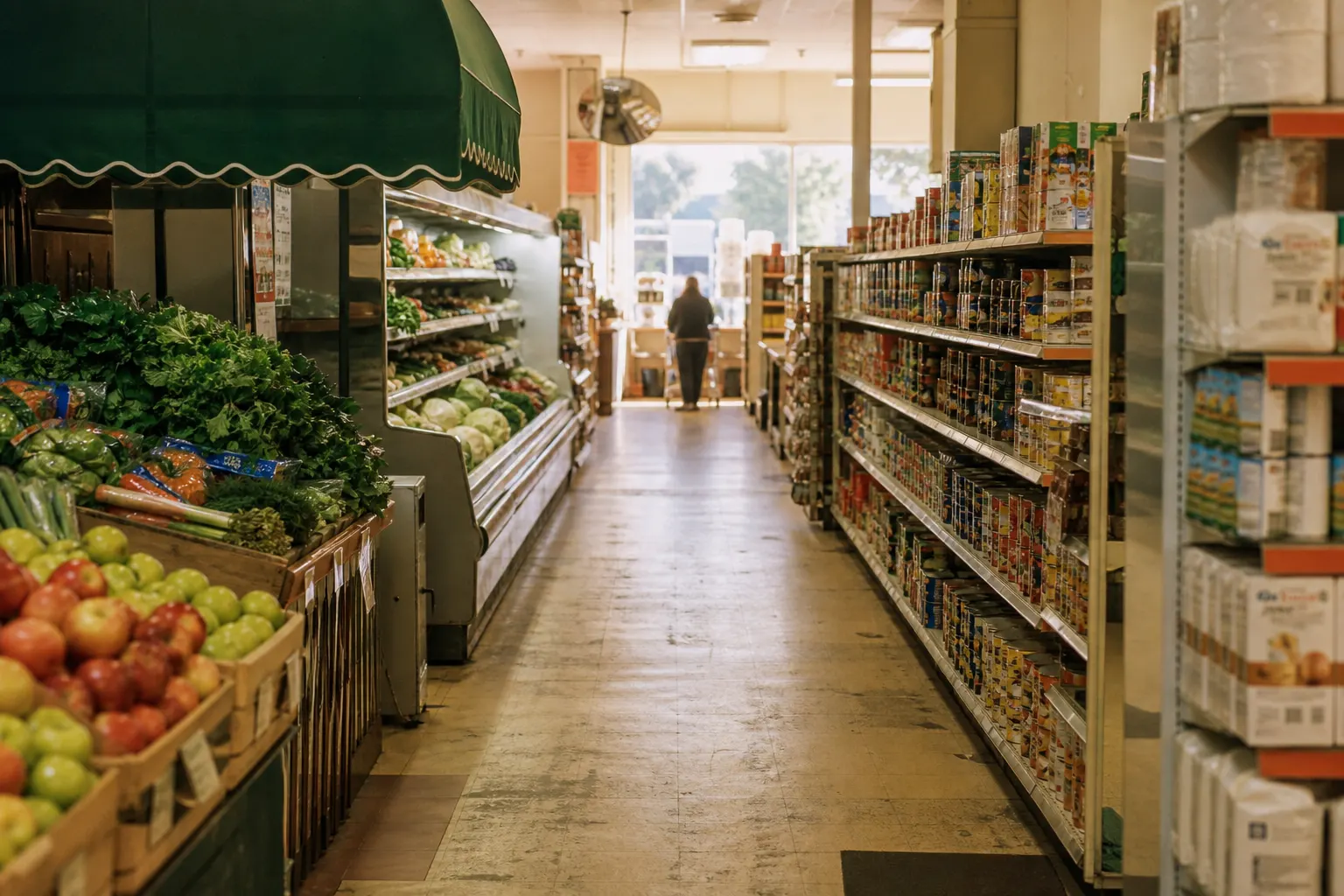
Triple net (NNN) — A lease structure in which the grocery tenant pays real-estate taxes, building insurance, and maintenance on top of base rent. In a strip center those nets usually arrive as CAM plus tax and insurance bills. A “cheap” base can be expensive once the stack is occupancy.
Abstract the lease before you argue the multiple. Grocery Store Business Broker — HedgeStone Business Advisors, led by Jason Taken — reads NNN as a cash stack, not as a real-estate slogan. Book a confidential intro when you have the last two CAM recons and the remaining term on one page.
Write one number: base rent + NNN + CAM + any required reserves. Then divide by sales. What is a reasonable rent-to-sales ratio is the occupancy question. The rent-as-percent-of-sales checker is the worksheet. FMI’s 2.1 percent average net profit for food retailers in 2025 is channel context that grocery is thin. Occupancy that looks fine on base rent and ugly on the stack will not leave room for that thin net.
A below-market related-party rent juiced SDE and will reverse when a stranger is the tenant. Recast to market occupancy, including the nets the landlord will actually bill. Lease due diligence and how to evaluate the lease are the reading order.
Independent grocers often pay a large pro-rata share because they are the traffic box. When a co-tenant leaves, that share can jump. A co-tenancy clause is how some leases give the grocer a remedy. An exclusive-use clause is how the grocer keeps a dollar store from becoming a second food file. Neither clause is NNN. Both change whether the NNN bill is survivable.
Lease assignment is the other close condition. A landlord who will not assign will not care that you underwrote the stack beautifully. Remaining term under two years without options is a price cut, not a footnote on the NNN page. Selling with a lease versus real estate is the owned-box fork. If the seller owns the dirt, recast the store on market NNN rent, then value the building separately.
Ask who replaces the roof, who mills the parking lot, and whether those jobs are CAM, a reserve, or a surprise assessment. Grocery HVAC and refrigeration already eat cash. A new lot in year two is how a “clean” recast becomes a bad year. Pull the last two CAM reconciliations. A recon that jumped after a co-tenant left is a diligence item, not a story you hear at the first true-up.
Caps matter. An uncapped CAM in a tired strip is a blank check. A cap that excludes taxes and insurance is a cap that excluded the parts that move. Write what is inside the cap on the abstract.
If the file is a strip NNN, bring the lease, the recons, and sales. Book the occupancy conversation. The hour is for the stack, not for a base-rent rumor that the grocery is cheap to house.
These figures are a teaching walk-through for Triple-net grocery lease reading, not a quote and not a sold comp. Order of operations: weekly sales, recast SDE, inventory at cost, then a multiple band.
| Input or output | Illustrative figure |
|---|---|
| Weekly sales (illustrative) | $195,000 |
| Annual sales | $10,140,000 |
| Recast SDE | $365,040 (3.6% of sales) |
| Inventory at cost | $563,333 (~18 turns) |
| Occupancy check | $365,040 / year (3.6% of sales) |
| Low going-concern | $1,293,413 at 2.00x SDE + inventory |
| High going-concern | $1,713,209 at 3.15x SDE + inventory |
| Sketch DSCR on a note | 1.49 |
If weekly sales or shrink move 8 percent, the SDE and the note move with them. That is why Jason Taken starts with scan data and the lease, not with a neighbor's rumor multiple.
Book the intro call with your side of the table ready: seller files or buyer capital. The calendar is the only next step.
Print these, mark them up, and bring the marked copy to the intro. They are educational. They are not a valuation letter and not a listing. All downloadable guides.
Have the file ready so the hour is a recast, not a scavenger hunt. Then pick a time.
Get a specialist on the other side of the table
Grocery deals turn on licenses, inventory, and a recast a lender will believe. Book the intro and bring the file.
Book an Intro Call With Jason TakenNot until you add taxes, insurance, CAM, and any roof or lot reserve. Grocery often pays a large share of the strip. Occupancy is the stack, not the base line on page one.
No. NNN is the structure: tenant pays the three nets. CAM is the common-area bill inside that stack — parking, snow, security, sometimes roof. A lease can be NNN and still fight about what CAM includes.
The CAM definition, the pro-rata share, cap or no cap, roof and lot responsibility, and what happens when a co-tenant goes dark. Those pages change cash more than a twenty-five cent bump in base rent.
Yes if the seller’s entity owns the building and charged a family number. Earnings juiced by below-market rent reverse on day one. Recast occupancy to what a stranger will pay.
Start a confidential grocery conversation
Whether you are exiting or acquiring, pick a time and we will talk through the file.
Book an Intro Call With Jason TakenThis page is educational information from Grocery Store Business Broker (HedgeStone Business Advisors). It is not legal, tax, or investment advice. Licensing, tax, and financing rules vary by state and deal. Confirm every item with counsel and your lender before you sign.
Ready when you are. Jason Taken will talk through the file.
Book a confidential intro