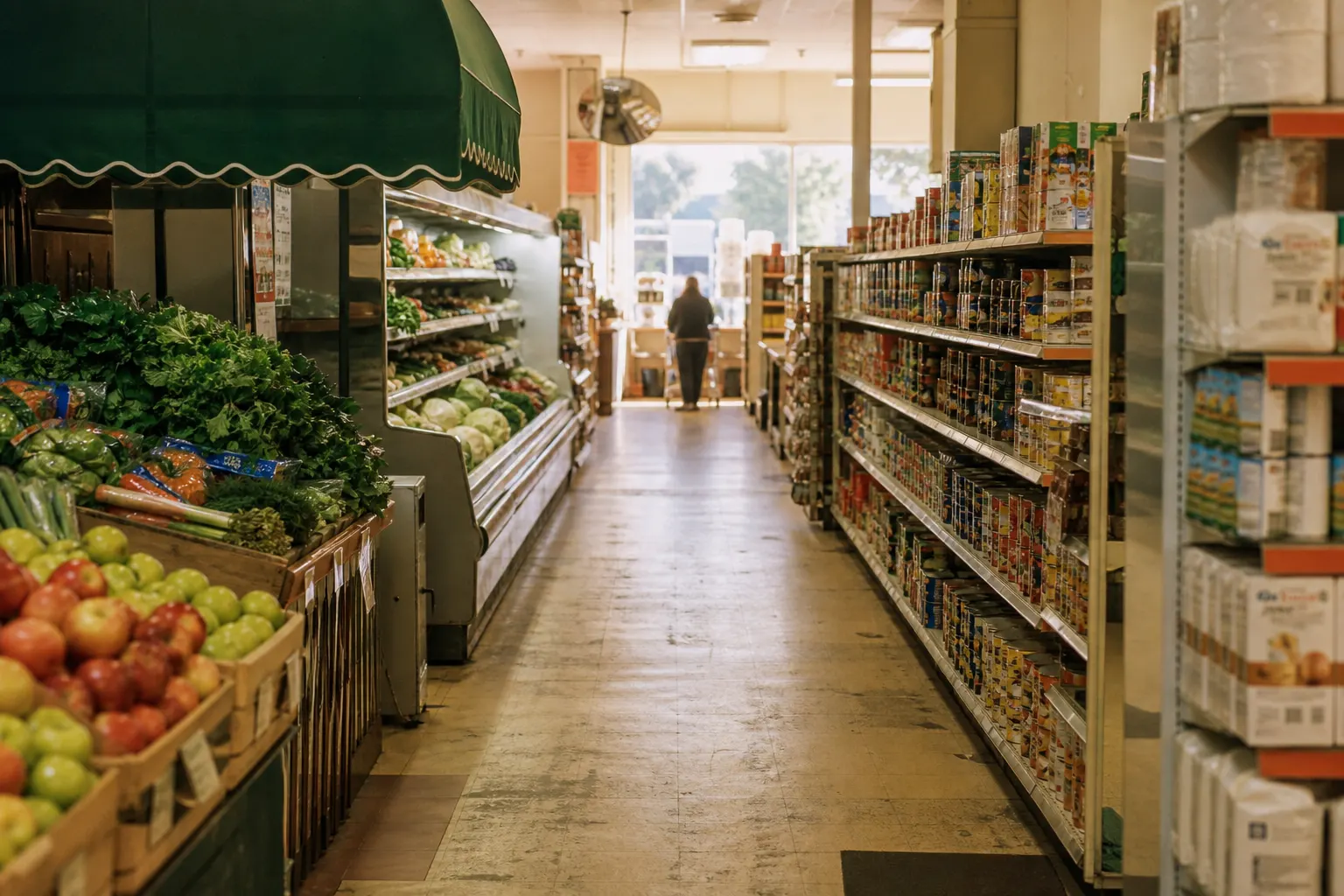
Generated illustration for this page. Not a listed store and not a photograph of a specific owner.
Asset sale — A purchase of listed assets — inventory, equipment, name, leasehold, and licenses to the extent they can move — rather than the stock of the selling company. Most independent grocery deals close this way so the buyer can step up basis and leave entity liabilities behind.
Read asset sale versus stock sale before you pick a Tuesday. Grocery Store Business Broker — HedgeStone Business Advisors, led by Jason Taken — prices the going concern as assets plus a separate inventory check. Book a confidential intro when you have a lease page and a license list. Email jason.taken@hedgestone.com if you want the structure hour before anyone drafts an APA.
What the buyer takes home
The buyer takes the cases that pass the count, the coolers and POS on the equipment schedule, the trade name if the seller owns it, and the leasehold if the landlord assigns. The APA is the list. If an asset is not on a schedule, assume it stays. The seller’s truck, personal computers, and cash in the safe are the usual surprises. Write them as excluded assets while the letter is still paper.
SBA 7(a) can finance a change of ownership up to a $5 million maximum. Lenders still underwrite the recast, the lease, and the license clocks. An asset sale does not make a thin file bankable. It does let the lender lien specific assets and let the buyer depreciate a stepped-up basis. Taxes on selling a grocery store is where allocation and Form 8594 live. Purchase-price allocation is the CPA’s map of the same deal.
What stays with the old entity
The selling company keeps its tax history, its unpaid payables, and any claim that attaches to the entity rather than to a listed asset. That is the point of the structure. Successor liability still appears on sales tax, some employment claims, and bulk-sale notice practice. An asset sale is not a magic wipe. Write tax clearance into escrow. Bulk-sales law is the notice and holdback conversation.
USDA FNS SNAP authorization does not transfer. A new owner files a new application. Many alcohol privileges need a new class, a quota transfer, or a control-state product file. The asset sale can condition close on those applications. It cannot put the seller’s permit in the buyer’s pocket. What an APA is walks the same line from the contract side.
Employees are not assets. The buyer may offer jobs. WARN and a union contract are calendar items on larger headcount files. A lottery retailer agreement often stays with the person who signed it, so confirm assignment before you treat that commission as part of the going concern.
When a stock sale still appears
A stock sale shows up when a lease or a license dies on assignment and equity is the only path that keeps the box open, or when a buyer wants a multi-store entity intact. Those files need counsel before the LOI. They are the exception for neighborhood independents. A stock deal also buys the company’s history. Price that history as risk, not as a shortcut around tax clearance.
When two offers sit side by side, compare cash at close, note terms, how the room is paid, and which licenses the buyer still has to apply for — not the headline price. If the building is offered, treat it as a second asset: recast the store on market rent, then value the real estate on its own. If you are choosing a structure, book the conversation with the lease, the warehouse paper, and three years of returns. The hour is for what actually conveys.
How a buyer would price Why grocery stores close as asset sales
Price language for Why grocery stores close as asset sales is (recast SDE x a defendable multiple) + inventory at cost, plus or minus lease and license risk. The table is one consistent example for this URL.
Input or output
Illustrative figure
Weekly sales (illustrative)
$78,000
Annual sales
$4,056,000
Recast SDE
$210,912 (5.2% of sales)
Inventory at cost
$338,000 (~12 turns)
Occupancy check
$89,232 / year (2.2% of sales)
Low going-concern
$759,824 at 2.00x SDE + inventory
High going-concern
$907,462 at 2.70x SDE + inventory
Sketch DSCR on a note
1.42
Inventory is cash at close, not a multiple. Confusing the two is how sellers over-ask and buyers under-cash the wire.
Book the intro call with your side of the table ready: seller files or buyer capital. The calendar is the only next step.
Download the worksheets, then book the call
Print these, mark them up, and bring the marked copy to the intro. They are educational. They are not a valuation letter and not a listing.
All downloadable guides.
Confidential Seller Playbook3 pages. Recast checklist, teaser rules, license calendar, and what to bring to the first call.
Buyer Underwriting Workbook3 pages. Sales proof, shrink, rent, SNAP, DSCR, and cash-to-close math a lender will fund.
SDE Valuation Worksheet2 pages. Line-by-line add-backs, inventory at cost, and a multiple band you can defend.
Closing & License Checklist2 pages. Count night, SNAP re-application, alcohol, tax clearance, and the first 30 days.
Frequently asked questions about Why grocery stores close as asset sales
Why do independent grocery deals use an asset sale?
The buyer wants a step-up in basis and a cleaner break from the seller’s entity debts. The seller still has tax allocation work. Counsel and the CPA own the paper; the store still has to close as listed assets.
Does an asset sale skip SNAP and alcohol applications?
No. USDA FNS requires a new owner SNAP application. Many alcohol privileges need a new class, a quota transfer, or a control-state product file. Structure does not replace those clocks.
What does the buyer not get in an asset sale?
The old company’s tax history, its hidden payables, and any license that cannot move. The buyer also does not get cash in the safe unless the APA lists it. Read excluded assets before you tour.
When would a grocery file still be a stock sale?
When a non-assignable lease or a license that dies on transfer makes equity the only path, or when a multi-store entity is sold as one company. Those files need counsel early. They are the exception, not the independent default.
Start a confidential grocery conversation
Whether you are exiting or acquiring, pick a time and we will talk through the file.
SBA 7(a) loans — U.S. Small Business Administration, accessed 2026-09-03.
This page is educational information from Grocery Store Business Broker (HedgeStone Business Advisors). It is not legal, tax, or investment advice. Licensing, tax, and financing rules vary by state and deal. Confirm every item with counsel and your lender before you sign.
Ready when you are. Jason Taken will talk through the file.