What departments count as center store?
Packaged grocery, frozen, dairy in many recasts, candy, and household and HBA. Meat, produce, deli, bakery, and floral sit on the perimeter. Confirm how this store’s POS maps the aisles before you blend them.
Grocery Store Business Broker · HedgeStone Business Advisors · Jason Taken
Last updated 2026-09-04
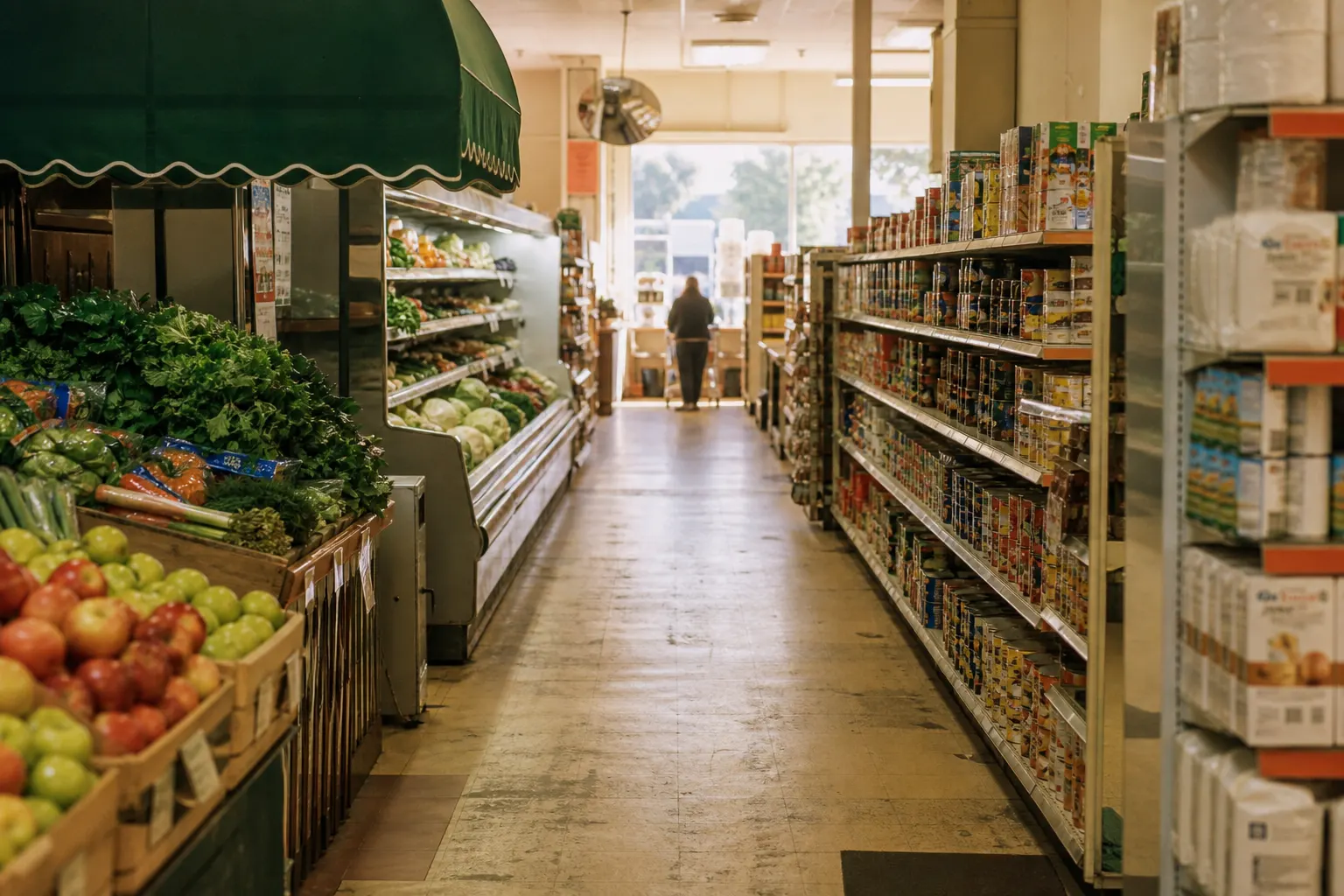
Center store — The grocery aisles of packaged dry, canned, frozen, and household goods, as opposed to the perishable perimeter. Center store is wholesaler book territory and the part of the mix most exposed to dollar-store and e-commerce leakage.
Export department sales before you treat the store as “a grocery.” Grocery Store Business Broker — HedgeStone Business Advisors, led by Jason Taken — reads the aisles as working capital and turns, not as décor. Book a confidential intro with the department tape and a stockroom guess. Email jason.taken@hedgestone.com if you want that mix hour.
Packaged grocery, frozen, much of dairy on some POS maps, candy, household, and health and beauty sit in the center. Meat, produce, deli, bakery, and floral sit on the perimeter. Confirm how this store’s scan file maps those departments. A “grocery” bucket that includes the hot bar will lie about aisle productivity.
The warehouse owns most of the center-store book. DSD owns chips, bread, soda, and some frozen on other files. Do not price the aisles as if every case came from one house. Private-label penetration is a banner conversation. National-brand leakage to a club or a dollar store is a mix conversation. FMI’s 2025 supermarket sample shows average weekly sales of $668,377. That is a whole-store channel fact. It does not tell you how much of this box is aisle versus rail.
A store that is all perimeter and thin in the aisles — a meat market with a grocery afterthought, or a produce-forward independent — has a different labor and shrink profile than a conventional independent with a full grocery book. Same weekly sales can be two different businesses.
Inventory turns are not one number. Center store, meat, produce, and wine do not share a clock. What is a good inventory turn? and shrink, margin, and turns keep the departments separate. Quote turns from the scan file. A storewide average hides a dusty aisle behind a fast produce table.
Inventory at cost on inventory night is mostly center-store cases. Write cost basis, unsellable goods, and a dispute rule into the count so a dusty grocery aisle is settled on the page. How inventory is counted at closing is the procedure. Perimeter still needs its own crew and its own shrink rules. Do not let a clean grocery room excuse a meat cooler you did not open.
Working capital follows the mix. A heavy aisle book needs more dollars in the room at close and more cash to reorder the warehouse. A perimeter-heavy file needs more cutters and more dumpage. Size working capital to the departments you actually restock.
Department gross margin hides in a storewide blend. Meat and produce can sink a “healthy” grocery number. Center store can look fine while the rails lose money. Recast SDE with the mix in view. FMI’s 2.1 percent average net profit for food retailers in 2025 is a thin food-retailer sample. It is not a license to ignore department losses.
If you have department sales and a floor plan, book the mix conversation. Bring fifty-two weeks by department, the warehouse book, and an honest note on what is dusty. The hour is for turns and the room, not for a storewide slogan.
These figures are a teaching walk-through for Center store mix on a grocery valuation, not a quote and not a sold comp. Order of operations: weekly sales, recast SDE, inventory at cost, then a multiple band.
| Input or output | Illustrative figure |
|---|---|
| Weekly sales (illustrative) | $124,000 |
| Annual sales | $6,448,000 |
| Recast SDE | $199,888 (3.1% of sales) |
| Inventory at cost | $358,222 (~18 turns) |
| Occupancy check | $161,200 / year (2.5% of sales) |
| Low going-concern | $728,015 at 1.85x SDE + inventory |
| High going-concern | $897,920 at 2.70x SDE + inventory |
| Sketch DSCR on a note | 1.41 |
If weekly sales or shrink move 8 percent, the SDE and the note move with them. That is why Jason Taken starts with scan data and the lease, not with a neighbor's rumor multiple.
Book the intro call with your side of the table ready: seller files or buyer capital. The calendar is the only next step.
Print these, mark them up, and bring the marked copy to the intro. They are educational. They are not a valuation letter and not a listing. All downloadable guides.
Have the file ready so the hour is a recast, not a scavenger hunt. Then pick a time.
Get a specialist on the other side of the table
Grocery deals turn on licenses, inventory, and a recast a lender will believe. Book the intro and bring the file.
Book an Intro Call With Jason TakenPackaged grocery, frozen, dairy in many recasts, candy, and household and HBA. Meat, produce, deli, bakery, and floral sit on the perimeter. Confirm how this store’s POS maps the aisles before you blend them.
Aisle goods turn slower than produce and sit deeper in the stockroom. A heavy center-store book needs more inventory dollars at close and more cash to reorder the warehouse. Perimeter-heavy files need more labor and more shrink control.
No. Turns are not one number. Center store, meat, produce, and wine do not share a clock. Quote department turns from the scan file, not a storewide average that hides the room.
It is most of the countable cases. Write cost basis, unsellable goods, and a dispute rule into the APA so a dusty grocery aisle is settled on the page, not after the crew is exhausted. Perimeter still needs its own count crew and shrink rules.
Start a confidential grocery conversation
Whether you are exiting or acquiring, pick a time and we will talk through the file.
Book an Intro Call With Jason TakenThis page is educational information from Grocery Store Business Broker (HedgeStone Business Advisors). It is not legal, tax, or investment advice. Licensing, tax, and financing rules vary by state and deal. Confirm every item with counsel and your lender before you sign.
Ready when you are. Jason Taken will talk through the file.
Book a confidential intro